
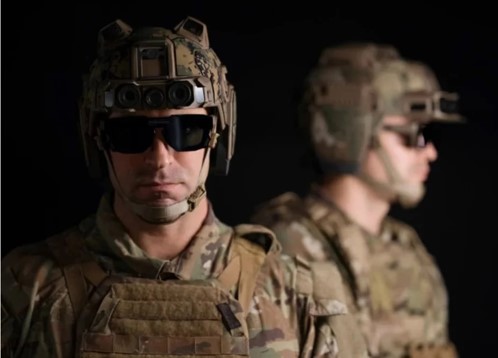
Selling military equipment or gear intended for the Canadian Armed Forces (CAF) or the Royal Canadian Mounted Police (RCMP) is not a simple commercial transaction. It is a closed, highly structured ecosystem in which legal compliance, security, and credibility far outweigh the product itself.
Since 2026, this market has been part of a national strategy aimed at strengthening Canada’s technological sovereignty, while imposing increased rigor on businesses, particularly in terms of security, procurement, and local economic benefits.
Contracts are centralized through Public Services and Procurement Canada (PSPC). In practice, the government does not contract with an improvised seller: it only works with companies that can demonstrate full mastery of the entire regulatory framework.
1. Mandatory Prerequisites: Legally Existing Within the System
Before even discussing a sale, a company must legally exist within this system. This begins with registration in the Controlled Goods Program (CGP), a mandatory step as soon as there is any question of handling, viewing, or transferring strategic materials. This registration involves a security screening of the company’s key personnel.
Next, to access contracts, the company must obtain an Industrial Security Clearance. This validates not only the individuals, but also the premises, computer systems, and the company’s ability to protect classified information.
Without these two elements (CGP registration + Industrial Security Clearance), no serious discussion with the Army or the RCMP is possible.
2. Product Compliance: Making the Equipment Legal in Canada
Once this foundation is in place, the product itself must exist legally. In the case of weapon-related equipment, this requires classification by the RCMP, notably by obtaining a Firearms Reference Table (FRT) number. Without this number, the product simply does not exist in the eyes of Canadian law.
In parallel, certain equipment must undergo a legality review to verify compliance with international law, particularly in matters of armed conflict.
In addition, there are obligations related to importation and exportation, which require specific licenses and expose companies to significant risks in the event of an error.
3. Accessing Opportunities: The BuyAndSell Canada Portal and Calls for Tenders
It is only after completing these steps that the company can access concrete opportunities, primarily through the BuyAndSell Canada portal, where calls for tenders are published. Responding to a call for tenders goes far beyond simply proposing a product. The company must demonstrate:
- its technical performance,
- its competitive cost,
- its long-term support capability,
- and above all, its contribution to the Canadian economy.
The government imposes Industrial and Technological Benefits (ITB) obligations, requiring suppliers to reinvest a portion of the contract value in Canada.
4. The Role of Distributors and Intermediaries
It is entirely possible to act as a supplier or distributor without being a manufacturer. In practice, a large portion of contracts involve companies that serve as intermediaries for foreign manufacturers, particularly American or European ones.
However, even without a factory, the obligations remain almost identical:
- firearms business permit,
- registration in the Controlled Goods Program (CGP), obtaining an Industrial Security Clearance,
- management of import licenses.
The distributor becomes responsible for the product’s compliance, its integration, and its longterm support, which implies real legal liability
5. Positioning Strategy: Targeting Specific Niches
Large defense companies (prime contractors) dominate major contracts. It is therefore unrealistic to try to compete directly with them on their flagship products.
The effective strategy is to position oneself in specific niches, often overlooked but essential, notably what is known as Soldier Systems. These are pieces of equipment used daily in the field: hearing protection, ballistic eyewear, helmets, gloves, etc.
These are frequently replaced products, directly influenced by user experience, and for which needs evolve rapidly.
6. Concrete Example: Challenges with Ballistic Eyewear
Ballistic eyewear, for example, is not only affected by fogging, but especially by its durability and comfort: it scratches quickly, exerts pressure on the head when worn with a helmet, and lacks stability during movement.
Moreover, needs are evolving toward technological functions, such as the integration of cameras for real-time capture of operations. This type of innovation aligns directly with the current priorities of the armed forces, which focus on situational awareness and data transmission.
These realities open concrete opportunities for agile companies. Rather than selling a generic product, it becomes possible to address a specific problem: improving comfort, extending equipment lifespan, or integrating new technological functions. In many cases, the solution does not involve replacing an entire piece of equipment, but rather offering targeted improvements that are faster to adopt and less costly for the State.
7. The Importance of Strategic Legal Support
In this type of market, the value of a company lies not only in what it sells, but in its ability to:
- understand the real needs from the field,
- navigate the regulations,
- properly structure its operations.
This is precisely where strategic legal support becomes decisive. A professional who masters both the regulatory framework, contractual requirements, and operational reality can not only secure the processes but also accelerate market access.
In practice, succeeding in Canada’s defense sector relies on a combination of elements that are rarely brought together: strict compliance, system understanding, strategic positioning, and protection of the company’s interests (particularly regarding intellectual property).
Without this framework, the risks are significant (administrative blockage, legal liability, or loss of control over a technology). With the right structure, however, a company can transform a concrete field need into a real and sustainable opportunity.
| Step | Description | Key Mandatory Elements | Consequences of Non-Compliance |
|---|---|---|---|
| 1. Registration in Controlled Goods Program (CGP) | Obtain the right to handle, view, or transfer strategic materials | – Security screening of company’s key personnel | Impossible to handle any controlled materials |
| 2. Obtaining an Industrial Security Clearance | Validate the company’s ability to protect classified information | – Screening of individuals, premises, IT systems, and procedures | No serious discussion possible with CAF or RCMP |
| 3. Product Classification and Compliance | Ensure the product is legal under Canadian and international law | – FRT number (for weapons/associated equipment)- Legal review (international & Canadian law)- Import/export licenses | Product does not legally exist; sale prohibited |
| 4. Responding to Calls for Tenders | Apply for government contracts through official channels | – Access contracts via BuyAndSell Canada portal- Demonstrate performance, cost, long-term support- Industrial & Technological Benefits (ITB) | Exclusion from government contracts |
| 5. Compliance with Contractual Obligations | Fulfill responsibilities as a supplier or distributor | – Firearms business permit- Compliance responsibility- Integration and support management | High legal liability and risk of sanctions |
| 6. Strategic Positioning | Target specific niches and differentiate from competitors | – Understanding field needs (comfort, durability, tech integration)- Focus on niche markets (e.g., Soldier Systems) | Difficulty competing with major prime contractors |